Whether you use an SSD or are experiencing issues with one, understanding how data is stored and recovered is crucial. This article provides a high-level overview of SSD architecture, the role of its controller, common causes of data loss, and techniques for SSD data recovery.
In This Blog:
- How an SSD Works – A simplified look at SSD architecture.
- The Role of the SSD Controller – Why it’s the backbone of your SSD’s functionality.
- Common Causes of Data Loss – Understanding what could jeopardize your SSD’s stored data.
- Impact of Bit Errors on Your Data – How small errors can create big problems.
- Influence of Cell Data Density – What SLC, MLC, TLC, and QLC mean for reliability.
- SSD Recovery Techniques – A deep dive into Chip-on and Chip-off methods.
How Does an SSD Work?
At its core, an SSD consists of an array of NAND chips that store physical data, managed by a controller. This controller is a critical component—it ensures that stored physical data is properly mapped to logical data, making it accessible to the user.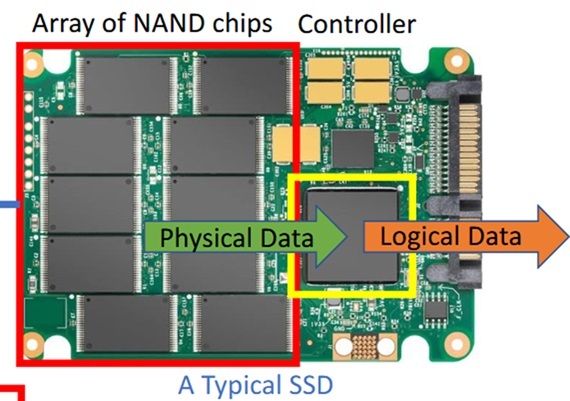
The SSD Controller: Constantly Battling Bit Errors
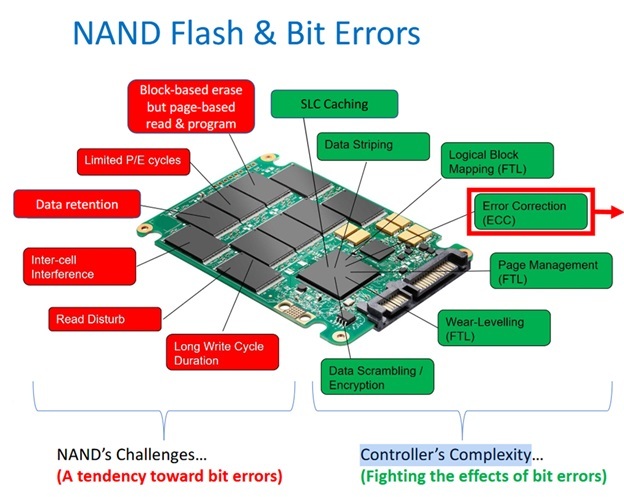
Ensuring logical data integrity is no simple feat. The controller faces numerous NAND-related challenges, including:
- Limited Program/Erase (P/E) Cycles – Each cell has a finite number of write operations.
- Inter-Cell Interference – Electrical disturbances between neighboring cells.
- Read Disturbance – Nearby cells affecting stored data due to repeated reads.
- Data Retention Issues – Electron detrapment leading to long-term degradation.
To mitigate these challenges, the controller’s firmware performs complex operations such as caching, striping, logical bit mapping, page management, wear leveling, encryption, and error correction (ECC). The controller is under constant stress, working tirelessly to maintain data accuracy.
Common Causes of SSD Data Loss
Given the SSD’s operation, several factors can contribute to data loss:
- Component Failure – A faulty NAND chip or a malfunctioning controller can lead to inaccessible data.
- Firmware Corruption – Errors in SSD firmware can make the drive unreadable.
- Unrecoverable Bit Errors – If the errors exceed the ECC’s correction capabilities, data loss occurs.
These issues may stem from power fluctuations, temperature variations, lack of proper shutdowns, or physical damage.
The Influence of Bit Errors
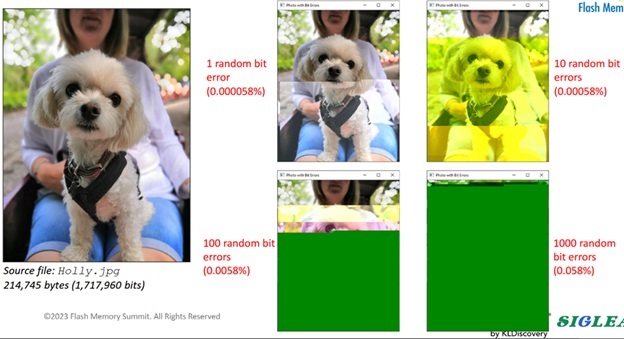
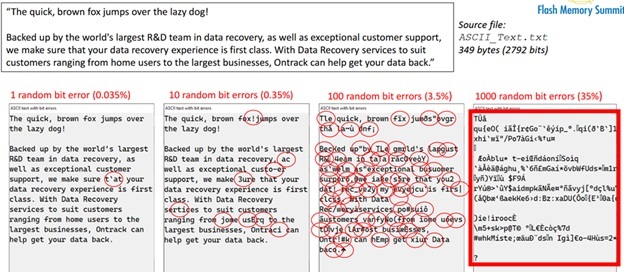
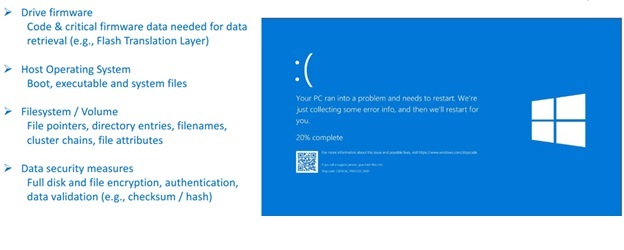
Bit errors can severely impact SSD performance across different applications. Their consequences vary depending on how the corrupted data is used:
- In Photos – Pixel distortions and image degradation.
- In Text Files – Misplaced or missing characters that can make documents unreadable.
- In Operating Systems – Corrupted system files leading to crashes or boot failures.
Cell Data Density: SLC, MLC, TLC, and QLC
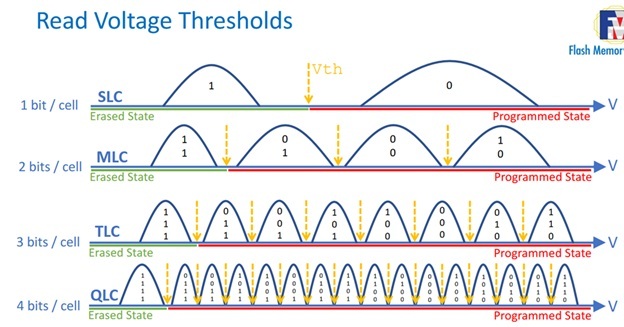
To increase SSD capacity, manufacturers pack more bits per NAND cell—classified as SLC, MLC, TLC, and QLC. The higher the number of bits per cell, the greater the likelihood of bit errors:
|
NAND Type
|
Bits Per Cell
|
Voltage Levels
|
Reliability
|
P/E Cycles
|
|
SLC
|
1
|
2
|
High
|
~100,000
|
|
MLC
|
2
|
4
|
Medium
|
~10,000
|
|
TLC
|
3
|
8
|
Lower
|
~3,000
|
|
QLC
|
4
|
16
|
Lowest
|
~1,000
|
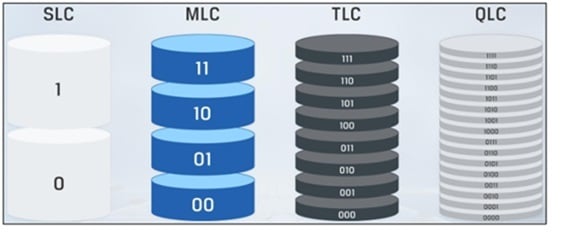
Since QLC cells store more bits and require finer voltage distinctions, they have a significantly higher bit error rate compared to SLC.

SSD Recovery Techniques: Chip-On vs. Chip-Off
There are two primary approaches for recovering lost SSD data:
Chip-On Recovery
This method retains the original controller, utilizing techniques such as:
- Component repair.
- Transfer of critical components to custom hardware.
- Firmware modification and system area repair.
Chip-Off Recovery
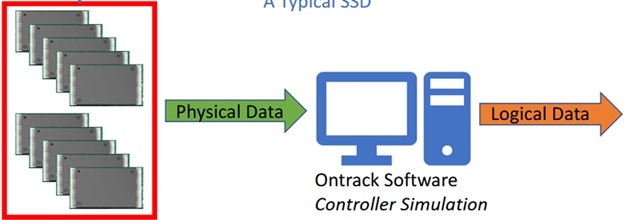
This complex technique involves extracting all physical data from NAND chips and simulating the controller's logic. It requires deep technical expertise in controller architecture and hardware encryption methods—often necessitating close collaboration with SSD manufacturers.
Cutting-Edge Research in SSD Recovery
Ontrack’s R&D team continuously advances SSD recovery methods, particularly in Chip-Off recovery. By eliminating controller-based reverse engineering, Ontrack ensures an optimal copy of the NAND's physical data, using the original controller to complete recovery—even when encryption schemes remain unknown.
Conclusion
SSD controllers work relentlessly to present your data flawlessly, but bit errors and other failures can jeopardize data integrity. Understanding SSD architecture and recovery techniques can help mitigate risks. Always back up your data, and if you ever require professional SSD recovery, Ontrack is here to assist.
Learn More:
Explore SSD data recovery services for expert assistance in recovering lost SSD data.

 Australia | English
 Locations
 Search






 Back to listing


