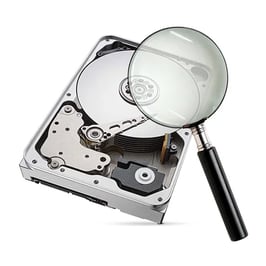
 The hard drive is one of the most vital components of modern computers, playing a central role in data storage and recovery. Since 1985, Ontrack has worked with nearly every type and brand of hard drive, giving us unparalleled expertise in this field.
HDD or SSD?
A traditional Hard Disk Drive (HDD) is a type of magnetic mass storage primarily used in computers, but also found in devices like portable music players, video cameras, DVD players, and gaming consoles.
A Solid-State Drive (SSD), on the other hand, stores data on an array of chips attached directly to a circuit board. SSDs are commonly found in smartphones, tablets, and other modern devices.
This article focuses on traditional magnetic hard drives with spinning platters. For information on SSDs, visit this link.
The History of the Hard Drive
The first hard drive, IBM's RAMAC ("Random Access Method of Accounting and Control"), was launched on September 13, 1956. At the time, few could have imagined the impact this invention would have on daily life.
The RAMAC was massive, weighing a ton and requiring an air compressor to protect its heads. Its platters were as large as pizzas, and its storage capacity of 5 MB—then groundbreaking—is now small enough to fit in your pocket. The RAMAC was available for long-term loan at $35,000 USD, equivalent to $254,275 USD today.
Fast forward to 1981, IBM introduced the first personal computer—the IBM 5150 PC, priced at $1,565 USD. It offered just 16 KB of memory, which was considered a luxury at the time. In the late 1980s, 100 MB of storage was regarded as "large"; today, such a size is insufficient even to install an operating system.
Over decades, hard drive technology has evolved significantly. Production increased from mere thousands in the 1950s to over 650 million units in 2010. The cost of magnetic storage dropped from $2,057 USD per megabyte in the 1960s to just a few cents per gigabyte today.
How Do Hard Drives Work?
Hard drives store data in binary code (1s and 0s) on the magnetic surface of spinning platters. Read/write heads float above the platter surface, propelled by the air layer created by the platter's ultra-fast rotation.
- Writing Mode: An electrical current flows through the heads, modifying the magnetic surface to inscribe a 0 or 1.
- Reading Mode: The process reverses—magnetic fields generate electrical currents in the read heads, converting them into a digital signal for the computer.
Technological advancements continually increase disk platter capacity, transitioning from Perpendicular Magnetic Recording (PMR) to Shingled Magnetic Recording (SMR), and further innovations like Heat-Assisted Magnetic Recording (HAMR) and Microwave-Assisted Magnetic Recording (MAMR). The number of platters in modern hard drives is also increasing.
Components of a Magnetic Hard Drive
A traditional magnetic hard drive comprises:
Mechanical Components
Platters: Double-sided circular trays made of aluminum or glass, coated with a magnetic layer for data storage. These platters spin at speeds ranging from 5,400 to 15,000 RPM.
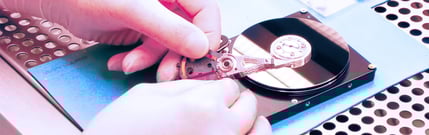
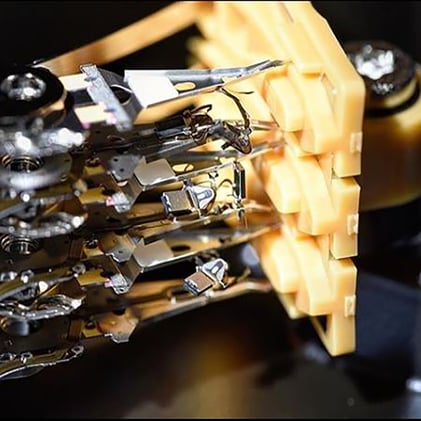
Read/Write Heads: Controlled by actuators and driven by a second motor, these heads pivot to access information across the platters. They never touch the surface, as even minor friction or dust can damage the drive.
Electronic Components
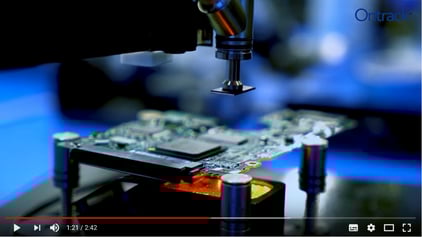
Printed Circuit Board (PCB): Houses microprocessors and associative memory for data transmission and processing.
Signal Processor: Converts electrical signals into digital signals for the computer to interpret.
Current Standards
- Technology: Magnetic hard drives dominate today's storage solutions, while magnetic tapes are used mainly for professional backup systems.
- Size: Hard drives now range from 3.5 inches (desktop) to 2.5 inches (laptop). Portable devices like MP3 players have transitioned from microdrives to SSDs.
- Interface:
- ATA/IDE: Common until 2005, replaced by SATA.
- SATA (Serial ATA): Faster transfer rates, widely used since 2005.
- SCSI (Small Computer System Interface): Connects peripherals via adaptors or controllers.
- SAS: Modern interface for enterprise-level storage solutions.
The Future of the Hard Drive
Hard drives continue to evolve, with storage capacities reaching 36 terabytes and predictions of households having over 25 drives as smart devices proliferate. The Internet of Things (IoT) is expected to drive further growth in data storage needs.
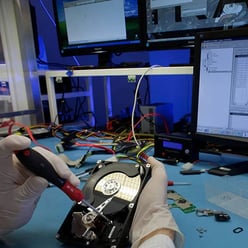
Recovering Data from Any Hard Drive
As devices become more advanced, the risk of data loss increases. Over the years, Ontrack has encountered numerous unusual cases, from USB sticks mistaken for dog bones to coffee spills and accidental photo deletions.
Ontrack offers innovative expertise to recover data from any hard drive, regardless of age or damage. Establishing a relationship with a data recovery service provider early ensures you are prepared for worst-case scenarios.
More about:
Hard disk drive recovery service

 United States | English
 Locations
 Search






 Back to listing


